

Most of us are familiar with the body's built-in responses to danger: fight, flight, and freeze.
When a threat appears, some people fight. They push back, take control, and try to overcome the problem head-on.
Others choose flight. They avoid the situation, retreat, or look for the fastest escape route.
Then there are those who freeze. Fear becomes overwhelming, and they feel stuck, unsure of what to do next.
These responses are part of how God designed our bodies to react to danger. Yet as I was reading Psalm 119:95-96, I found myself considering a fourth response that goes beyond our natural instincts.
Faith.
Not because the danger isn't real. Not because we're pretending everything is okay. But because we choose to trust God more than we trust our fear.
The psalmist writes:
"The wicked are waiting to destroy me, but I will ponder your statutes. To all perfection I see a limit, but your commands are boundless." (Psalm 119:95-96)
He is facing a genuine threat. The wicked are actively seeking his destruction. This is not a minor inconvenience or an imagined fear. That's serious opposition. Yet his response isn't fight, flight, or freeze.
His response is faith.

Notice where he directs his attention:
"But I will ponder your statutes."
In other words, I know what they're doing, but I'm choosing what I'm going to focus on.
That's powerful.
The psalmist doesn't allow the actions of other people to control his thoughts. He doesn't let fear become the loudest voice in his head. Instead, he intentionally turns his attention toward God's Word.
How often do we do the opposite?
We replay conversations. We imagine worst-case scenarios. We lose sleep over things we can't control. We spend hours thinking about what people might do, what might happen, or how things could go wrong.
Meanwhile, God is inviting us to focus on what He has already said.
Isaiah 26:3 says,
"You will keep in perfect peace those whose minds are steadfast, because they trust in you."
Peace doesn't come from having all the answers. Peace comes from fixing our minds on the One who does.

Paul says something similar in Philippians 4:6-7:
"Do not be anxious about anything, but in every situation, by prayer and petition, with thanksgiving, present your requests to God. And the peace of God, which surpasses all understanding, will guard your hearts and your minds in Christ Jesus.” —ESV
Have you ever noticed that Paul doesn't promise an explanation here?
He promises peace that guards the heart and mind, not necessarily the immediate removal of every problem.
Read together, these passages suggest that God can sustain us inwardly even before our circumstances change.
I find it interesting that the psalmist is talking about God's commands while Paul is talking about God's peace. They're not exactly the same thing, yet both point to a similar truth: what God provides is bigger than what we can fully grasp or explain.
Isn’t that often what we want most? We want God to explain everything. Yet Paul points us somewhere different.
Sometimes we assume we need answers before we can have peace. Paul says the opposite. God's peace is not reserved for people who have everything figured out. It's available even when questions remain unanswered.
In Philippians 4:8–9, Paul also calls them to direct their thoughts toward what is true and worthy of praise, and to practice what they have learned. Peace is connected with a life of prayer, thoughtful attention, and obedience—not merely trying to force a calm feeling.

Faith Doesn't Ignore Reality
I think sometimes we mistake faith for pretending.
We think faith means acting like the problem isn't there.
That's not what the psalmist is doing.
He acknowledges the threat. He names it. He knows the danger is real. Yet instead of letting fear make his decisions, he lets God's truth guide him.
That's the same thing we see throughout Scripture.
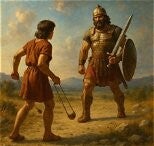
When David faced Goliath, he didn't deny the giant existed. He simply believed God was bigger (1 Samuel 17).
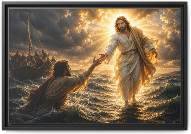
When Peter stepped out of the boat, the storm was still raging around him (Matthew 14:22-33).
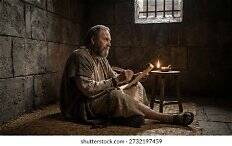
When Paul sat in prison, the chains were still on his wrists, yet he continued to trust God (Philippians 1:12-14).
Faith is not the absence of trouble.
Faith is choosing to trust God in the middle of it.
When Everything Else Reaches Its Limit
Verse 96 explains why the psalmist responds in faith:
"To all perfection I see a limit, but your commands are boundless."
The older I get, the more I understand this verse.
Everything in life has limits.
People let us down.
Money runs out.
Plans fall apart.
Our strength fades.
Even the best things in this world eventually show their weaknesses.
The psalmist recognized that every earthly source of security has boundaries. No matter how dependable something seems, it eventually reaches its limit.
God alone does not.
His wisdom doesn't expire.
His promises don't fail.
His truth doesn't become outdated.
His faithfulness doesn't run dry.
Isaiah reminds us:
"The grass withers and the flowers fall, but the word of our God endures forever." (Isaiah 40:8)
Jesus said:
"Heaven and earth will pass away, but my words will never pass away." (Matthew 24:35)
Everything else may have an expiration date, but God's Word does not.

Choosing Faith
What I love about this passage is that it shows faith as a choice.
The psalmist couldn't control his enemies.
He couldn't remove the threat.
He couldn't guarantee a certain outcome.
What he could control was where he placed his trust.
That's true for us too.
We can't control every diagnosis, every financial challenge, every difficult person, or every unexpected hardship.
We can't always fight it.
We can't always run from it.
And sometimes we feel frozen by it.
But we can choose faith.
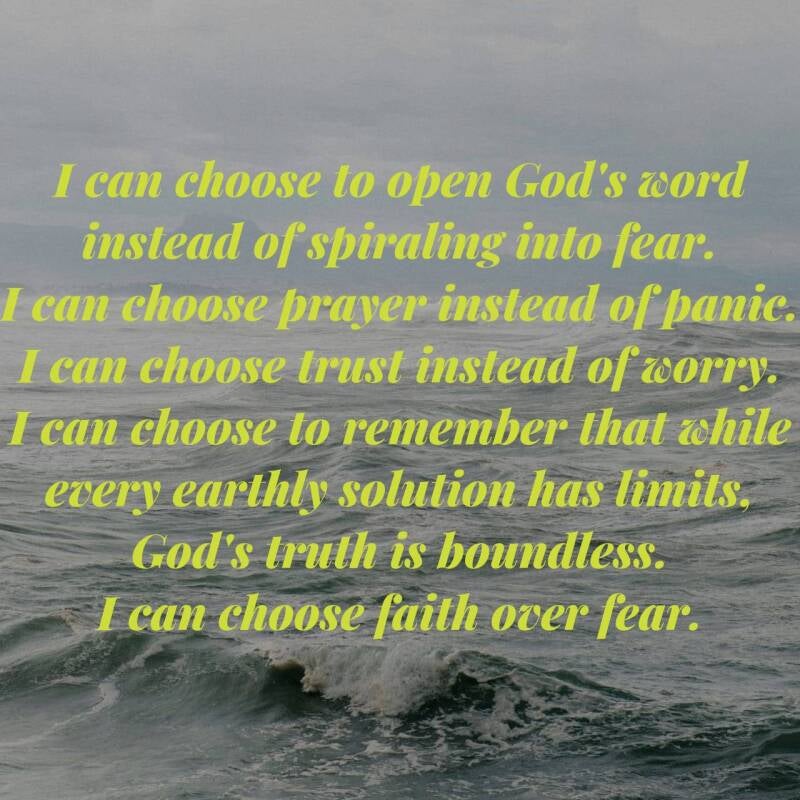
We can choose to open God's Word instead of spiraling into fear.
We can choose prayer instead of panic.
We can choose trust instead of worry.
We can choose to remember that while every earthly solution has limits, God's truth is boundless.
So the next time life triggers a fight, flight, or freeze response, remember that Scripture points us to another option.
Faith.
Faith doesn't deny reality. It acknowledges the problem while trusting the One who is greater than it.
Faith says, "I see the problem, but I also see my God."
Faith says, "I don't know what will happen next, but I know who is in control."
Faith says, "Everything around me may have limits, but God's promises do not."
And sometimes the greatest change isn't what happens around us, but what God does within us.
Add comment
Comments