

My Bible reading this morning was in Jeremiah 7, and as I was reading, God drew my attention to this verse: “Return to my place that was in Shiloh… See what I did to it because of the evil of my people Israel.”
It’s part of Jeremiah’s Temple Sermon — a message that must have shaken the people of Jerusalem. They believed the temple made them untouchable, as if God’s presence in a building guaranteed their safety, even while their hearts wandered far from Him. They treated the temple like a spiritual security system: as long as it stood, they assumed they were fine.
But God points them back to Shiloh.
Shiloh wasn’t just a place; it was a memory. It was the first home of the tabernacle and the Ark of the Covenant — the center of worship, the symbol of God dwelling among His people. But over time, the people who lived there drifted. They treated God’s presence like a good‑luck charm instead of honoring Him with their lives. Eventually, Shiloh was destroyed. Abandoned. Empty.
God essentially says, “Look at Shiloh. Don’t think Jerusalem is immune. Don’t trust in the building — trust in Me.”
And honestly? That hits home for us today more than we realize.
The Temples We Build Without Realizing It
After Jesus’ sacrifice, God’s dwelling place shifted. The temple isn’t a building anymore — it’s us. Paul says plainly: “You yourselves are God’s temple.” And yet, we still build our own versions of Shiloh.
We build temples out of:
-
our finances
-
our relationships
-
our talents
-
our routines
-
our own strength

We say we trust God, but our actions whisper something different. We cling to things that feel secure, familiar, controllable. We treat blessings like safety nets. We treat our abilities like anchors. We treat our plans like guarantees.
But just like Shiloh, anything we trust more than God can crumble.
And when it does, we feel it — that abandoned‑house feeling. The emptiness. The quiet. The “How did I get here?” moments.
When God Walks Into the Ruins
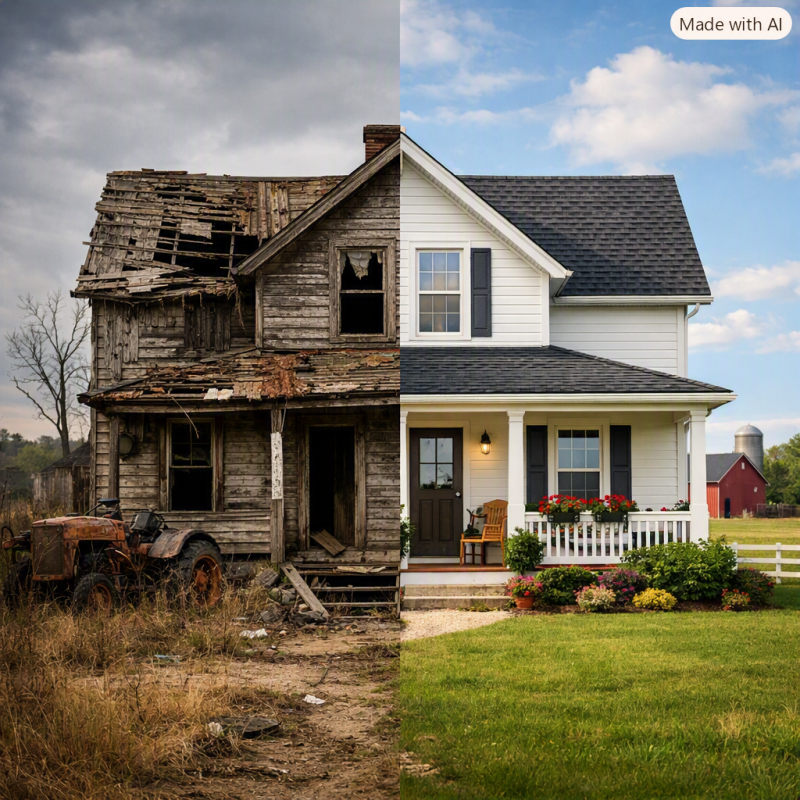
Imagine stepping into an abandoned house — not the cute, fixer‑upper kind, but one that’s been left alone for years. The air is heavy, still, almost stale. Dust floats in the sunlight like it’s suspended in time. The floor creaks under your feet, and every sound feels louder than it should. Paint peels from the walls in long, curling strips. A window is cracked, letting in a thin draft that carries the smell of old wood and forgotten memories. You notice places where the ceiling has sagged, where water damage has left dark stains, where something once beautiful has been worn down by neglect.
And as you stand there, you can almost sense what used to be — laughter, life, warmth — but it’s gone now. What remains is a shell. A structure that once held purpose but now feels empty, vulnerable, exposed.
Sometimes our hearts feel exactly like that.
Life hits hard. Disappointments pile up. We drift. We avoid dealing with things we don’t want to face. And before we realize it, the place inside us where joy used to live looks a lot like that abandoned house — quiet, cracked, cluttered, and worn down.
But that’s exactly where God shows up.
He comes knocking again, and just like an abandoned house, He comes in and starts working and renovating.
He doesn’t stand at the doorway judging the mess. He steps inside with intention — with the eyes of someone who sees not just what is, but what can be. He walks through every room, every corner, every damaged place, already envisioning restoration.
Renovation Hurts — But It Heals
Let’s be honest: renovation is painful.
Sometimes God tears down walls we thought were load‑bearing. Sometimes He asks us to leave rooms we’ve lived in for years — rooms that feel familiar but aren’t healthy. Sometimes He exposes things we’ve plastered over. Sometimes He asks us to let go of things we’ve called “security” but were actually chains.
And some days? We don’t want to do it. We don’t want to show up for the work. We don’t want to face the mess.
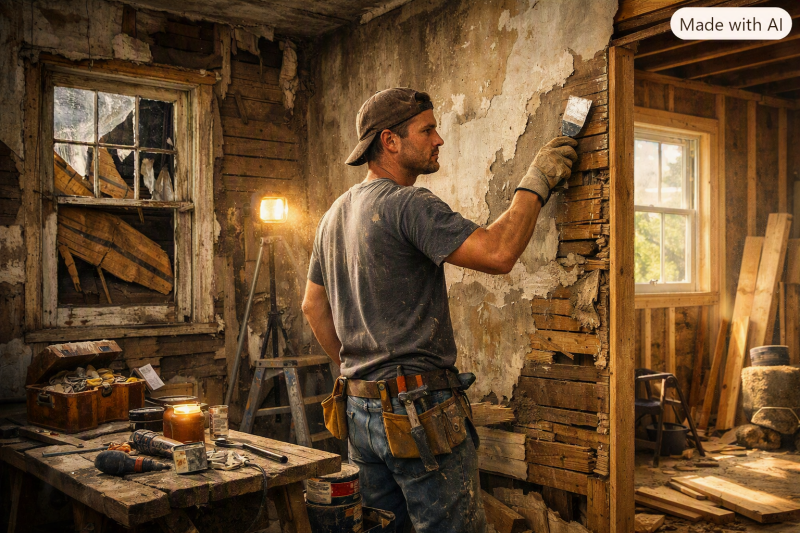
But God sees the finished house.
He sees the beauty He’s building. He sees the strength He’s restoring. He sees the peace He’s installing. He sees the joy He’s painting across the walls.
And one day — whether in this life or the next — He will call us into the living room of that restored heart, sit us down on the brand‑new couch, and say:
“Well done, my good and faithful servant. Welcome home.”
The Heart of Jeremiah 7 — And the Heart of Us
Jeremiah 7 isn’t just a warning; it’s an invitation.
God isn’t saying, “Fear what happened to Shiloh.” He’s saying, “Don’t settle for empty religion. Don’t settle for false security. Don’t settle for a life built on anything but Me.”
He wants truth in the heart. He wants devotion that shows up in action. He wants relationship, not ritual. He wants trust, not tradition. He wants surrender, not self‑reliance.
And He wants to make His home in us — not a patched‑up version, but a restored, renewed, redeemed one.
If You’re in the Middle of Renovation
If you feel like your life is under construction right now, you’re not failing — you’re being rebuilt.
If you feel like walls are coming down, God is making space. If you feel like things are being stripped away, God is clearing out what can’t hold you anymore. If you feel uncomfortable, God is reshaping you. If you feel tired, God is strengthening you. If you feel exposed, God is healing you.
He sees the finished house. He delights in the process. And He calls you His dwelling place.
That’s the promise at the heart of the gospel — not just that God saves us, but that He stays with us, renovates us, and makes us His home.
Add comment
Comments