

A seed looks so small—quiet, ordinary, almost forgettable. Yet inside that tiny shell is an entire world waiting to burst into life. Plants don’t just grow; they transform through hidden beginnings, dramatic bursts of energy, seasons of waiting, and moments of pruning that make them stronger. And the more you learn about seeds, light, nutrients, and even cold winter pauses, the more you realize: the life of a plant is anything but simple. It’s a story of resilience, timing, and breathtaking design.
Life Cycle
A plant’s life cycle starts with a seed, which germinates when it has the right conditions, grows into a seedling, matures into an adult plant, and then makes flowers, fruits, and new seeds to repeat the cycle. To thrive, most plants need water, air, sunlight, warmth, and nutrients from soil; young seedlings also need a suitable place to grow and enough oxygen for healthy root and shoot development.
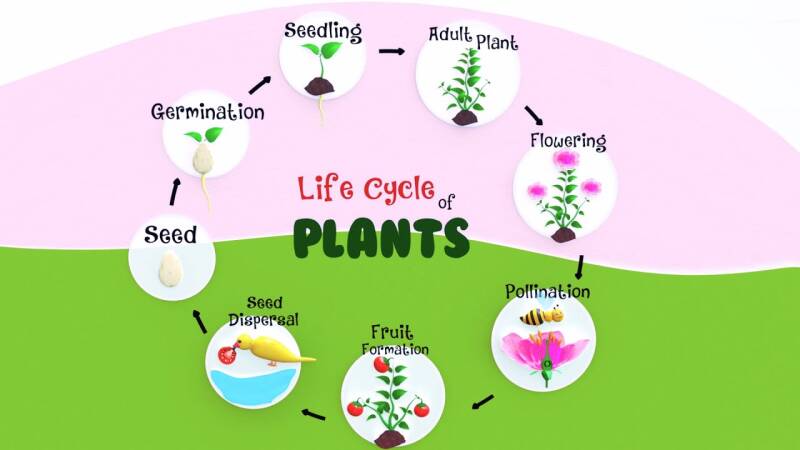
Life Cycle Stages
- Seed: The embryo is protected by a seed coat and often carries stored food to start growth.
- Germination: Water, warmth, and oxygen trigger the seed to sprout; the root usually grows first, then the shoot emerges.
- Seedling: The plant begins making its own food through photosynthesis as true leaves develop.
- Mature plant: The plant grows larger, forms flowers or fruits, and reproduces by making new seeds.
What Plants Need
- Sunlight for photosynthesis
- Water to move nutrients and support growth
- Air for respiration and normal cell function
- Nutrients in soil for strong roots, stems, and leaves
- Proper temperature and space so seeds can germinate and roots can spread.

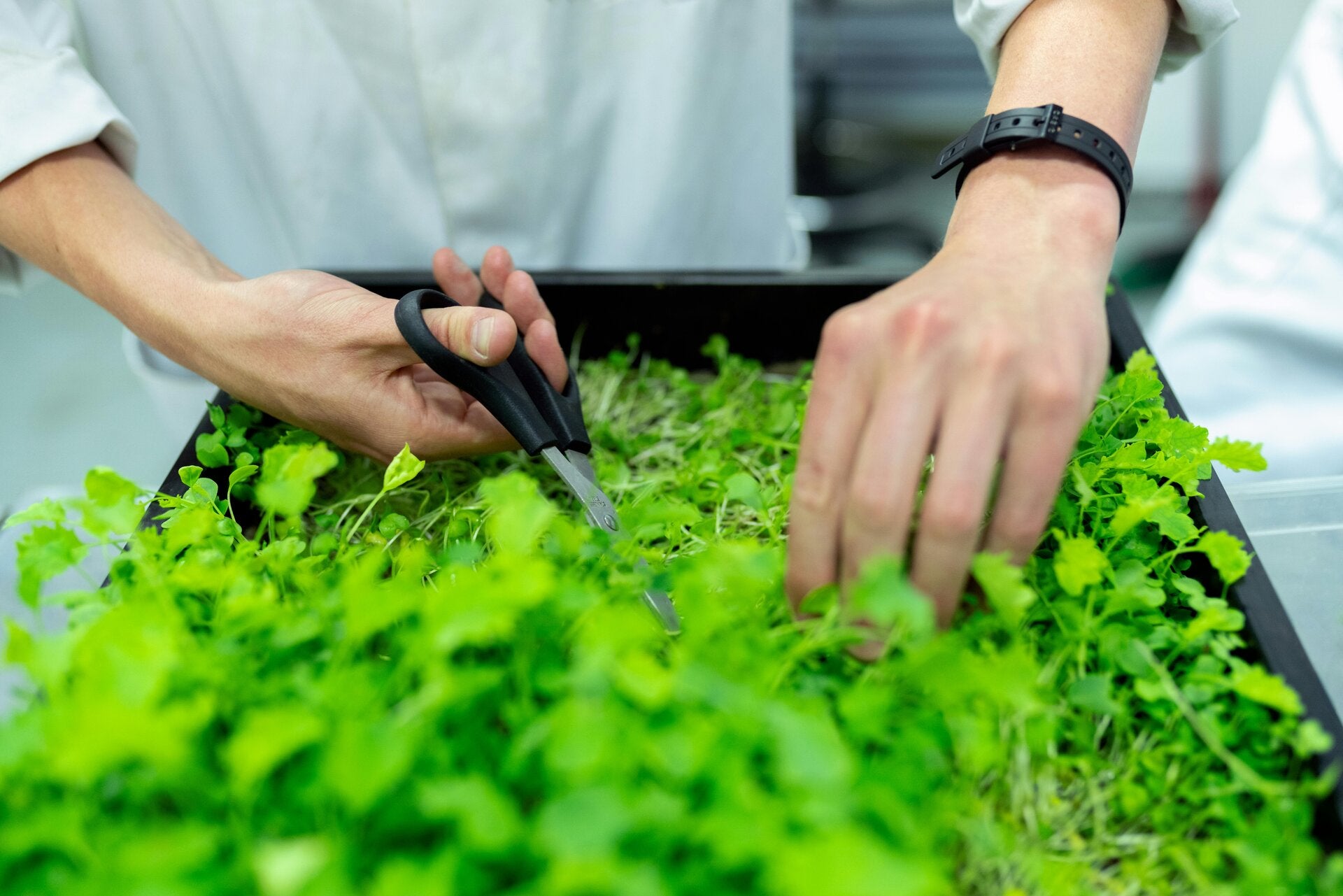
Pruning Process
Pruning is the selective removal of parts of a plant, usually dead, damaged, diseased, crowded, or weak stems, branches, or leaves. It is often done to shape the plant, improve air flow and light penetration, and encourage healthier growth.
- Inspect the plant and identify what should be removed.
- Use clean, sharp tools to make a tidy cut.
- Cut just above a healthy bud or branch junction
- Remove only what is needed so the plant is not stressed.
Why Pruning Matters?
Pruning helps the plant redirect energy toward healthy growth instead of supporting damaged or overcrowded parts. It can also reduce disease risk, improve flowering or fruiting, and keep shrubs and trees structurally strong and manageable. For example, trimming a crowded shrub can let more sunlight reach the inner leaves, which often improves growth and reduces fungal problems.
How God Does This in Our Lives
God works the same way with us.
We all develop “overgrowth” — habits, distractions, attitudes, relationships, or patterns that crowd our hearts and block His light. When God prunes us, He isn’t punishing us. He’s clearing away what keeps His truth, His presence, and His guidance from reaching our inner life.
Just like pruning:
1. God removes what is dead or draining
He cuts away what no longer serves our growth — old wounds, unhealthy attachments, sin patterns, or false beliefs.
2. God clears what is overcrowded
Sometimes we’re simply too busy, too distracted, or too tangled in our own plans. God gently trims back what competes for our attention.
3. God opens space for His light
When He prunes, He creates room for His Word, His wisdom, and His Spirit to reach the deepest parts of us.
4. God strengthens our center
Just as a plant becomes stronger when light reaches its core, we become spiritually stronger when God’s truth reaches our heart.
5. God prepares us to bear fruit
Jesus said in John 15:2 that the Father prunes fruitful branches so they will bear even more fruit. Pruning is not loss — it’s preparation.
Cold Stratification
What is it?
Cold stratification is a cold, moist treatment that imitates winter and helps break seed dormancy so certain seeds can germinate at the right time. Some seeds require it because their embryos are naturally “set to wait” until they have experienced winter-like conditions, which prevents them from sprouting too early and dying in an unsuitable season.
In nature, seeds from many trees, shrubs, wildflowers, and perennials stay dormant through cold weather and then sprout when spring arrives. Cold stratification recreates that by keeping seeds cool and moist for a set period, often in a refrigerator, so the seed coat and internal dormancy signals can be overcome. In simple terms, it tells the seed, “winter is over, it is safe to grow”.

Why only certain seeds need cold stratification
Some plants evolved or were created to grow in climates with harsh winters—trees, shrubs, wildflowers, and many perennials. Their seeds fall to the ground in autumn, sit through months of cold, and only sprout when spring warmth returns. The cold:
-
softens or cracks the seed coat
-
signals the embryo that winter has passed
-
ensures germination happens in the safest season
Other plants—especially annuals or tropical species—don’t face freezing winters. Their seeds don’t need that protective delay. They’re meant to sprout quickly whenever conditions are warm and favorable.
How this mirrors God’s work in our lives
Just like some seeds need winter before they can grow, some seasons in our lives require waiting, stillness, or even hardship before God brings new growth.
Your document draws this connection clearly: “Seasons of waiting, hardship, or stillness are not wasted in God’s hands.”
Cold stratification teaches us:
1. Waiting is purposeful, not pointless
A seed in the cold looks inactive, but inside, it’s preparing. Likewise, God often works beneath the surface long before we see change. James 1:2–4 reminds us that trials produce steadfastness.
2. God protects us through delays
Just as a seed would die if it sprouted too early, we can be harmed by blessings or responsibilities we’re not ready for. God’s “not yet” is often His mercy.
3. Growth comes after the cold
Winter doesn’t last forever. Romans 5:3–5 shows that suffering produces endurance, character, and hope—fruit that only grows after a cold season.
4. Different people have different spiritual timelines
Not every seed needs winter, and not every person needs the same kind of waiting. God knows exactly what each heart requires to grow well.

In short: cold stratification is a built‑in safeguard for plants that live in places where timing is the difference between life and death.
Cold stratification is a reminder that God uses seasons—warm ones and cold ones—to prepare us for the exact moment we’re meant to grow. Some seeds burst to life quickly; others need winter first. And both are part of God’s good design.
Nutrients
Different nutrients affect different parts of plant development.
- Nitrogen mainly drives leafy growth and chlorophyll production, so plants with enough nitrogen tend to grow fuller, greener leaves.
- builds the “green machine”
- Phosphorus supports root development, flowering, and seed formation.
- helps the plant establish and reproduce
- Potassium helps overall plant vigor, water regulation, and resistance to stress.
- helps it run smoothly under stress
- Calcium supports cell walls and new growth
- Magnesium is part of chlorophyll
- Iron and Zinc help with enzyme activity and normal development.


Why This Matters for Plants
Plants go through stages, and each stage has different needs:
-
Vegetative growth → Nitrogen builds strong, green leaves.
-
Rooting & flowering → Phosphorus helps the plant establish and reproduce.
-
Stress & maturity → Potassium strengthens the plant and helps it endure.
If you give a plant the wrong nutrient at the wrong time, it won’t thrive. Too much nitrogen during flowering? You get leaves instead of blooms. Not enough phosphorus early on? Weak roots. Low potassium? The plant collapses under stress.
Healthy growth requires the right nourishment at the right moment.
How God Does This in Our Lives
Just like plants, we grow in stages — and God gives us what we need when we need it.
1. God gives “nitrogen seasons” — growth and learning
These are times when He fills our lives with teaching, encouragement, and new opportunities. We grow quickly. We feel energized. Our “leaves” flourish.
2. God gives “phosphorus seasons” — rooting and establishing
These are deeper seasons. We learn to pray more, trust more, and build foundations that will support future fruit. It’s quieter, but essential.
3. God gives “potassium seasons” — strength under stress
These are the hard seasons. Trials, stretching, waiting, refining. But just like potassium helps a plant endure heat, drought, or disease, God strengthens us so we don’t break under pressure.
Spiritually, that’s exactly what God does — He equips us to stand firm when life gets difficult.
Light and Reproduction
What is light penetration?
Good light penetration means sunlight can reach more leaves throughout the plant, not just the top layer. That improves photosynthesis across the plant, which gives it more energy to support flowering and fruit production. Better airflow and light also reduce crowded, shaded growth, which can lower disease pressure and help flowers and fruits develop more evenly.
How does light penetration improve flowering and fruit reproduction?
Pruning often improves light penetration by removing excess or overlapping branches, so the plant can direct more energy into productive growth instead of crowded foliage. For fruiting plants, this often means better fruit color, size, and ripening because more leaves and fruits receive usable light.

Conclusion
When you step back and look at the life of a plant, it’s hard not to see pieces of your own story tucked inside its quiet rhythms. Seeds don’t sprout overnight. They sit, they wait, they push through darkness, and they grow long before anyone notices. And honestly, we do the same. Some of our most important growth happens in seasons that feel slow, hidden, or even uncomfortable.
As I said earlier:
“God plants, nourishes, waits, prunes, and brings fruit at the right time.”
That’s a truth you can carry into any season. The waiting isn’t wasted. The pruning isn’t punishment. The growth isn’t always visible—but it’s always happening.
Plants remind us that progress is rarely loud. It’s steady. It’s patient. It’s built on small, faithful conditions repeated over time. And when the fruit finally comes, it’s the result of everything that happened long before.
So let this be your takeaway: Keep tending what matters, even when you can’t see the results yet. Trust the process, trust the timing, and trust the Gardener. Fruit comes—always—in its season.
That’s a lesson worth remembering.
Add comment
Comments